About font
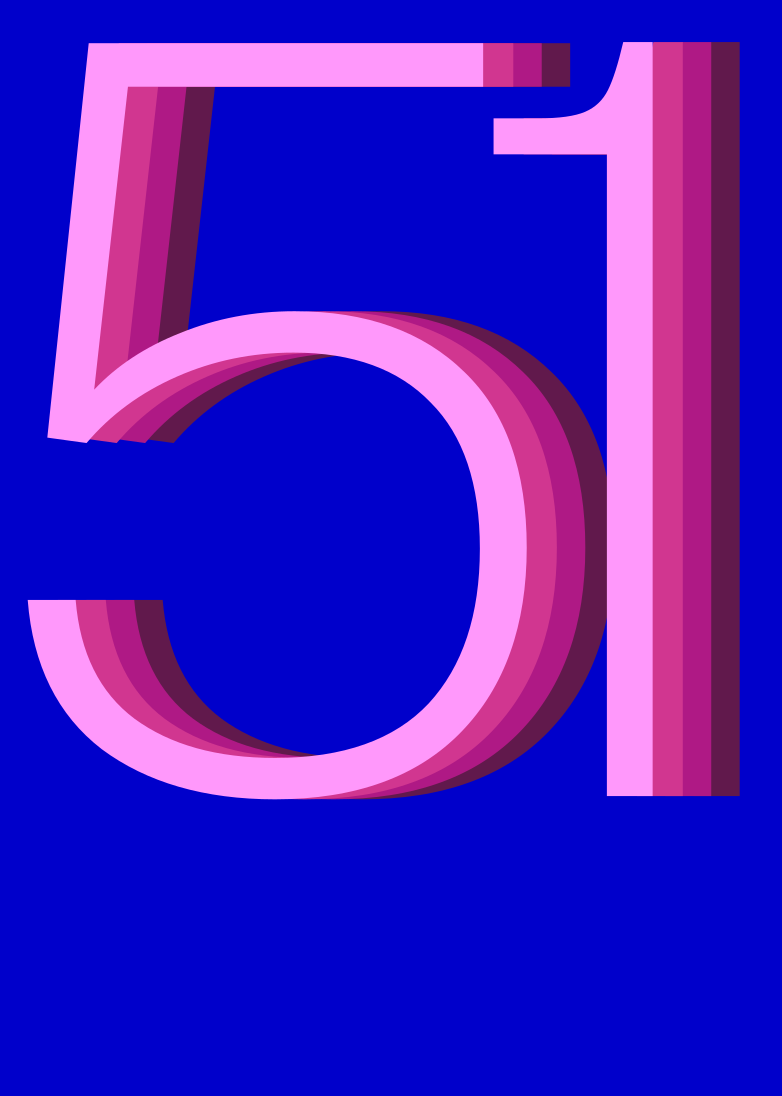
Inspired by EXAT 51’s artistic and architectural endeavors,
this typeface features clean lines and structural clarity. The
Exat typeface captures the very essence of modernist ideas,
striking a harmonious balance between form and function.
It undeniably references one of the most popular typefaces
of all time, all while incorporating extraordinary width and
weight options in a robust character set. Exat is inarguably
our most ambitious release yet, offering the user total
control in choosing the right type—fit for any situation.
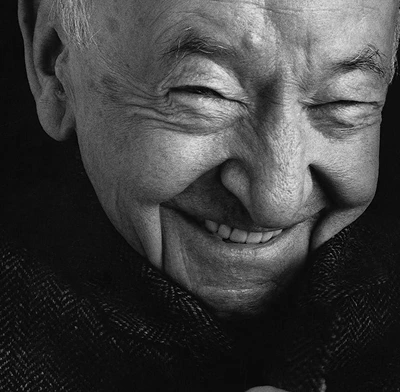
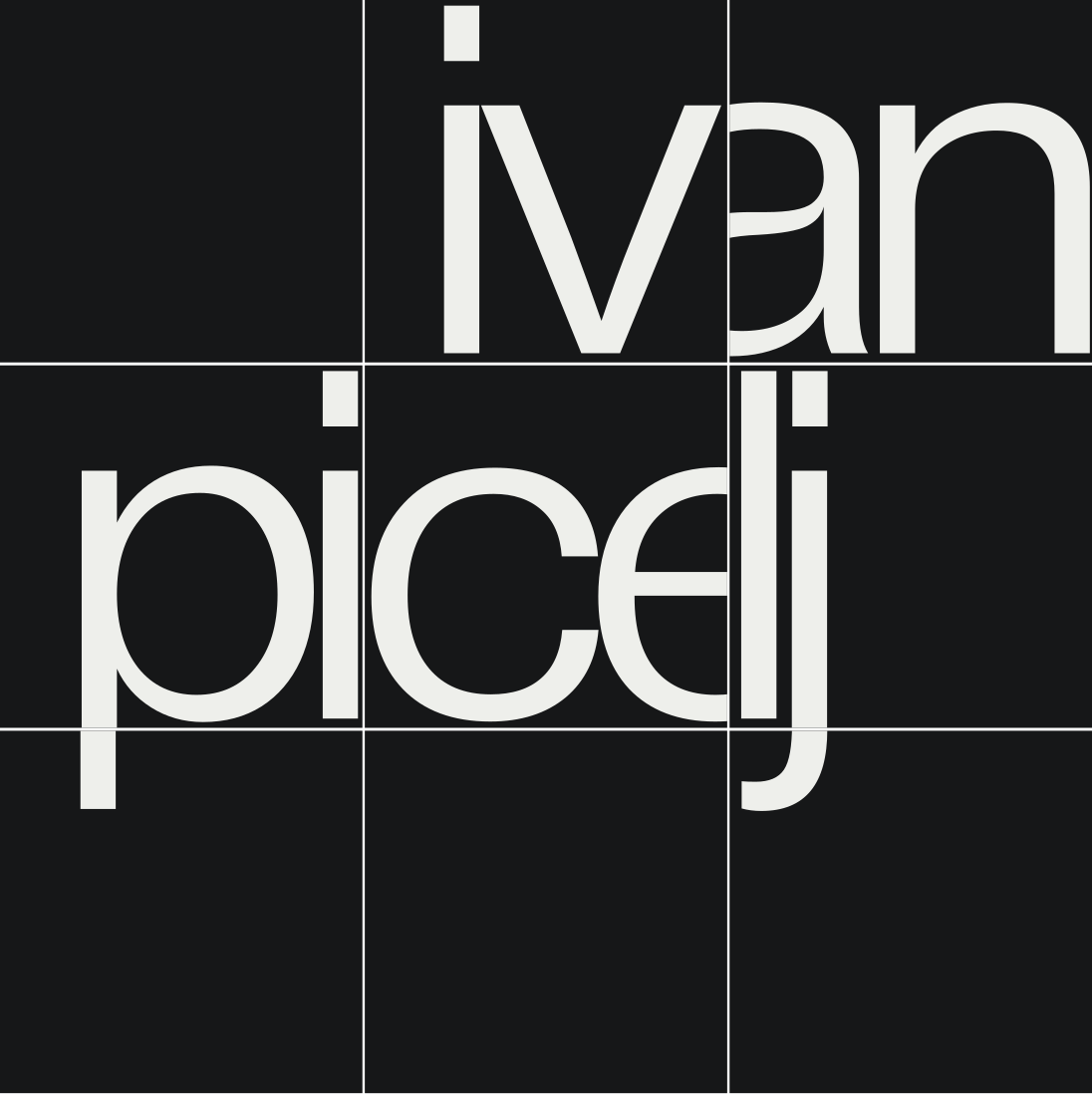
Croatian artist and EXAT 51 co-founder, was a key figure in the 1960s New Tendencies movement.
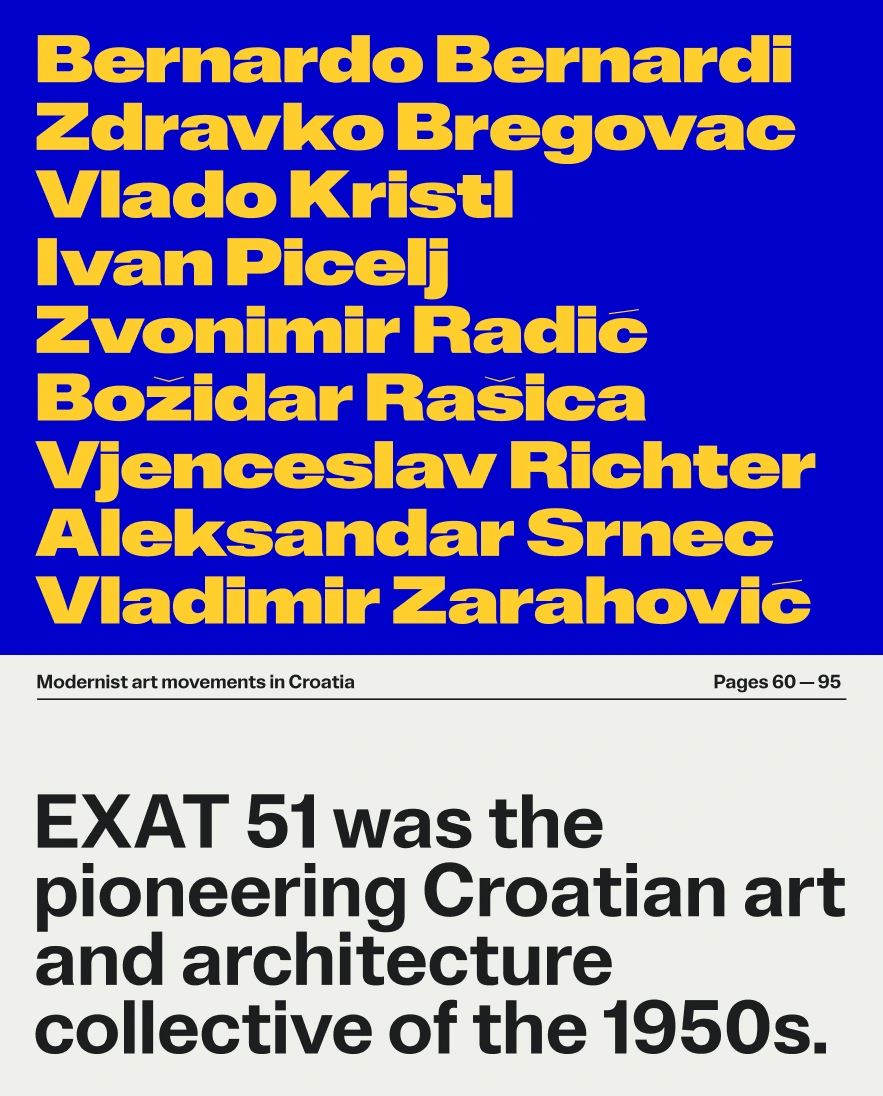
A compound of the abbreviation of the term “Experimental Atelier” and the year in which its
members officially formed a collective, EXAT 51 was a prolific and pioneering group of
Croatian
architects and artists. They came together to promote abstract art and contemporary
communication with the desire to establish a model of Total Design. Ivan Picelj, a world-
renowned Croatian artist and designer, was among its most prominent members. He not only
co-founded EXAT 51 but was also a crucial contributor to the New Tendencies, an
international
movement during the 1960s.
In 1962, Picelj initiated a series of his self-published “Edition a” art booklets, having
released a total of seven publications up until 1964. Each issue of “Edition a” featured the
work of one artist —mostly of a colleague whose work he admired. On top of that, Picelj
designed, edited, and printed these all by himself. The visually most striking part of these
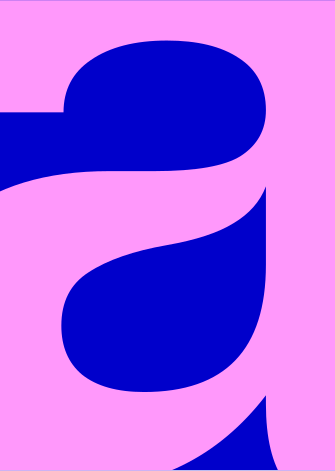
16×16 cm booklets was their covers, which featured the lowercase letter “a”, silk-screened
in a
different, vibrant color for each of these issues. The letter itself appears to be a
modified
version of Helvetica, a tremendously popular typeface during that period.
Concurrently, most European designers of that time sought clarity and visual unity, making modernism a powerful force in global graphic design, with its influence being palpable even today. Propelled by the work of Swiss masters—like Josef Müller-Brockmann, Armin Hofmann, and Emil Ruder—and the widespread use of the Helvetica typeface, modernism swiftly conquered the world, later even bearing the name International Style. The resulting designs were eclectic, vibrant, and infused with modernist energy. In large part thanks to Picelj, who “brought Helvetica to Croatia”, this style was cherished locally as well, putting Zagreb and Croatia on the International Style map.
Concurrently, most European designers of that time sought clarity and visual unity, making modernism a powerful force in global graphic design, with its influence being palpable even today. Propelled by the work of Swiss masters—like Josef Müller-Brockmann, Armin Hofmann, and Emil Ruder—and the widespread use of the Helvetica typeface, modernism swiftly conquered the world, later even bearing the name International Style. The resulting designs were eclectic, vibrant, and infused with modernist energy. In large part thanks to Picelj, who “brought Helvetica to Croatia”, this style was cherished locally as well, putting Zagreb and Croatia on the International Style map.
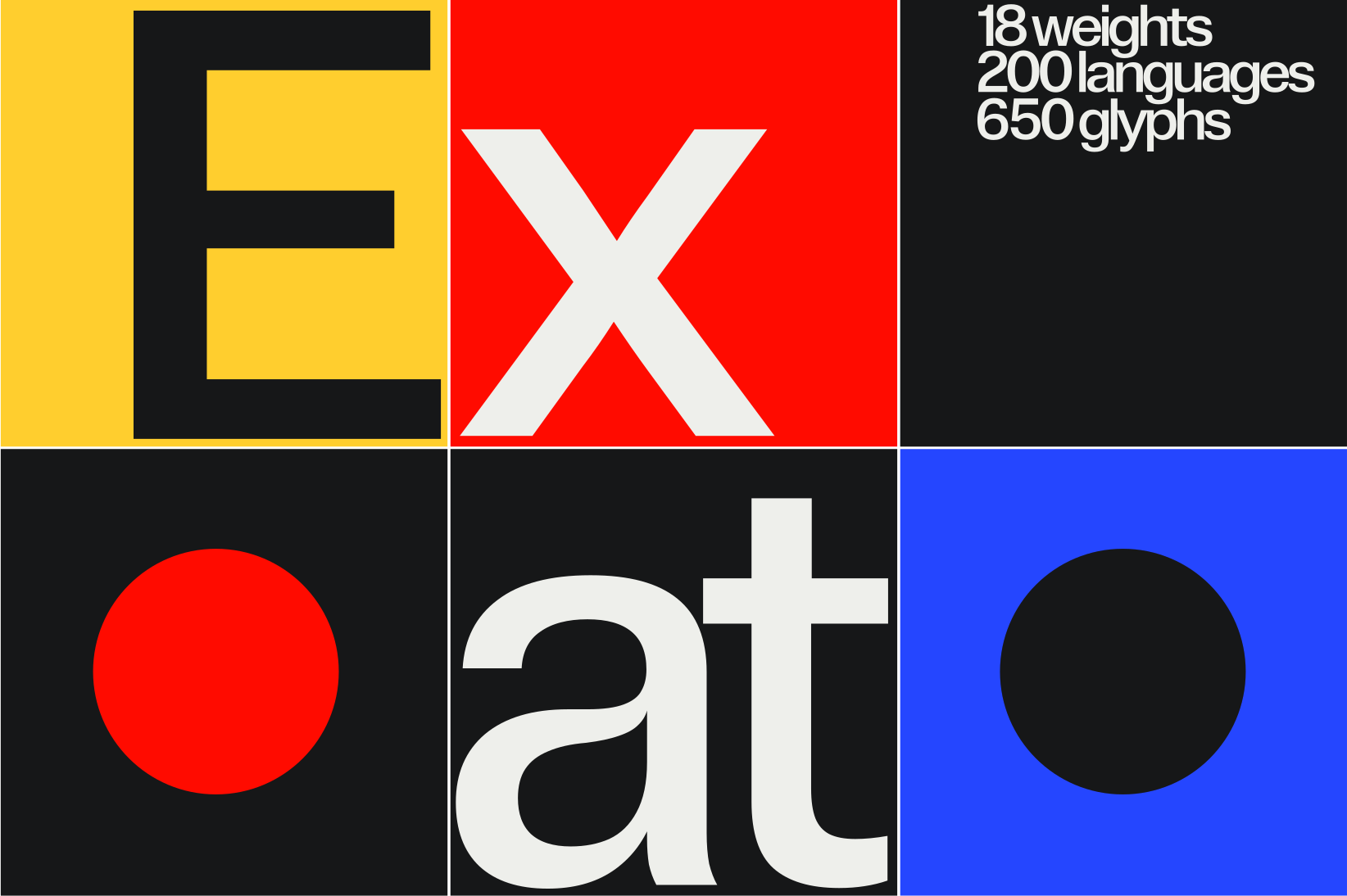
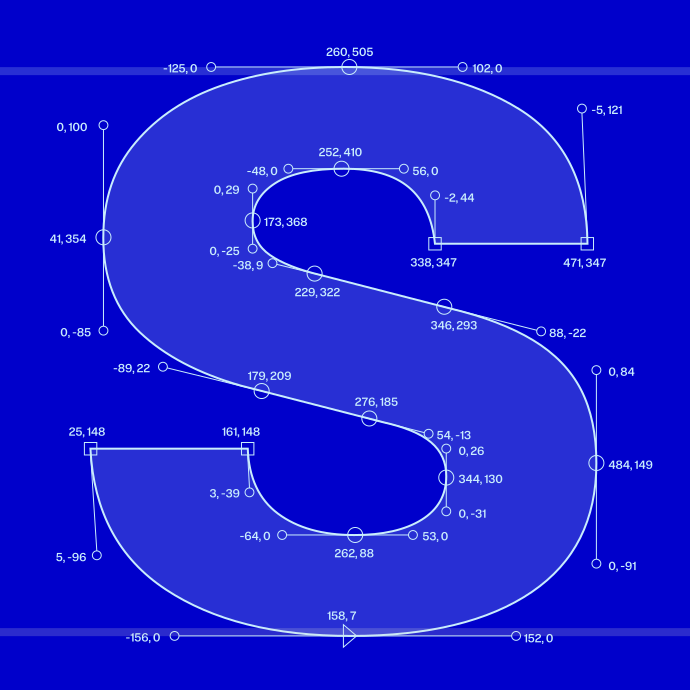
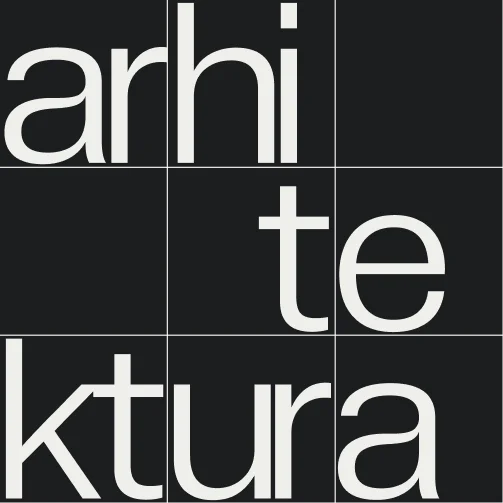
Exat started as a redrawing of a single letter “a” and the desire to craft a typographic
world
around it.
Hot Type constructed a typeface that would bear witness to the local story of homeland —
Croatia, but also be used by creatives all around the world, without necessarily having to
know
how it came to be.
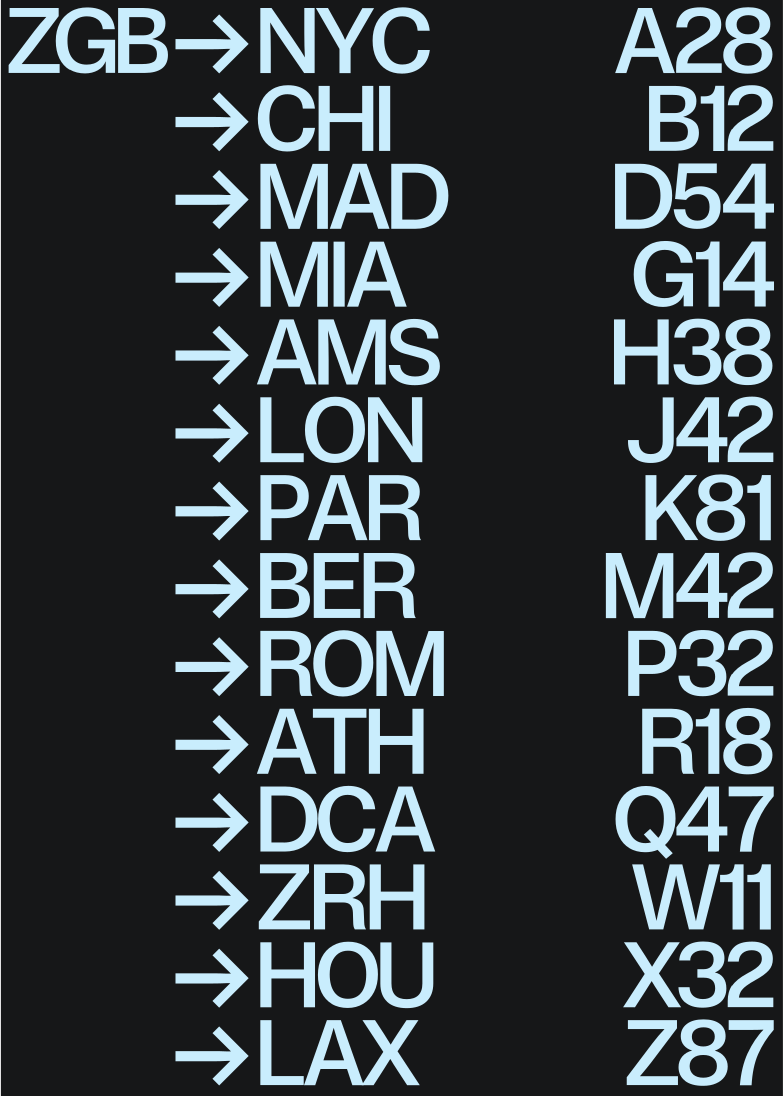
→
Exat strikes a balance
between form and
function, neutrality
and character.
Type tester
Size
Line Height
Letter Spacing
28
28
28
28
28
28
28
28
28
28
modernism
- becić
- dabac
- detoni
- džamonja
- horvat
- knifer
- meštrović
- murtić
- petlevski
- picelj
- richter
- srnec
- vaništa

exat
exat
exat
exat
exat
exat
exat
exat
exat
exat
exat
exat
exat
exat
exat
exat
exat
exat
exat
exat
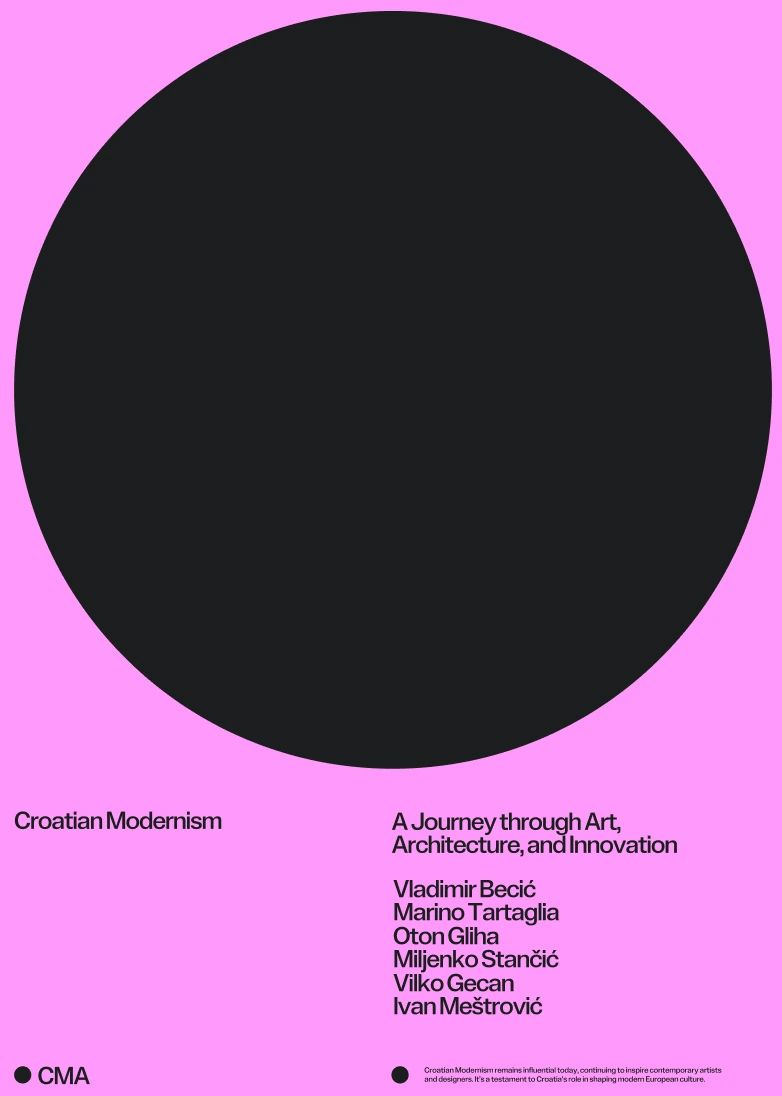
Modernism in Croatia emerged as part of broader European trends during the late 19th and
early
20th
centuries, reflecting the nation’s unique cultural and historical context. The movement
gained
prominence in architecture, literature, painting, and design, where Croatian artists
sought
to
balance international modernist ideals with local traditions and identities. Key
influences
included
the Vienna Secession, Bauhaus, and other European avant-garde movements, which inspired
Croatian
creatives to challenge classical forms and embrace innovation.
Croatian modernism developed as part of the broader European modernist movement, yet it
retained
a unique identity shaped by the country’s cultural traditions and socio-political
circumstances.
It flourished in the arts, architecture, and literature, leaving a lasting legacy on
Croatian
culture.
The modernist movement in Croatia during the early 20th century marked a period of
significant
innovation across various artistic disciplines. Influenced by European trends like the
Vienna
Secession, Cubism, and Bauhaus, Croatian modernists sought to merge international styles
with a
strong sense of national identity. This synthesis is particularly evident in architecture,
where
figures such as Drago Ibler and Stjepan Planić created iconic works blending functionalism
with
local aesthetics. Literature also flourished during this period, with Miroslav Krleža at the
forefront, using modernist techniques to critique social and political realities.
In the visual arts, Josip Račić and the Munich Circle introduced expressive and symbolic elements that later evolved into abstraction. The EXAT 51 group, established in 1950, became a pivotal force in advancing modernist ideals in post-war Croatia, promoting abstract art and connecting Croatian modernism to global movements. Despite political and cultural challenges, Croatian modernism achieved remarkable innovation, cementing its place as a key chapter in the country’s cultural history.
In the visual arts, Josip Račić and the Munich Circle introduced expressive and symbolic elements that later evolved into abstraction. The EXAT 51 group, established in 1950, became a pivotal force in advancing modernist ideals in post-war Croatia, promoting abstract art and connecting Croatian modernism to global movements. Despite political and cultural challenges, Croatian modernism achieved remarkable innovation, cementing its place as a key chapter in the country’s cultural history.
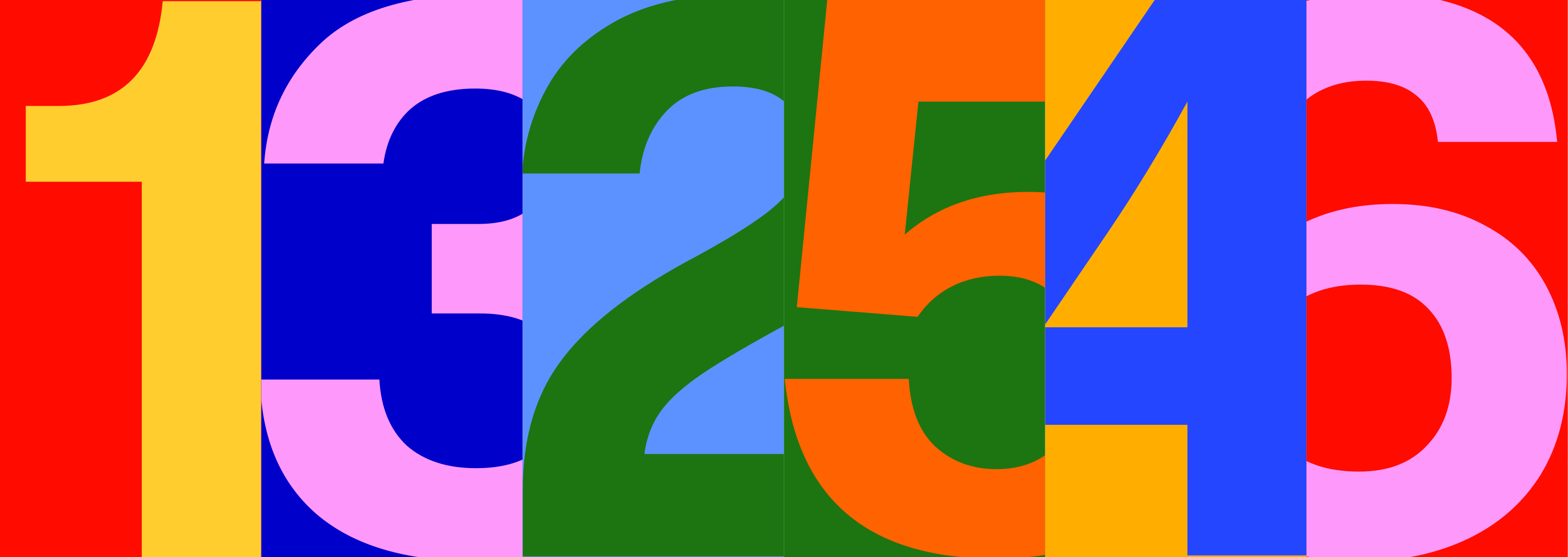
1
3
2
4
6
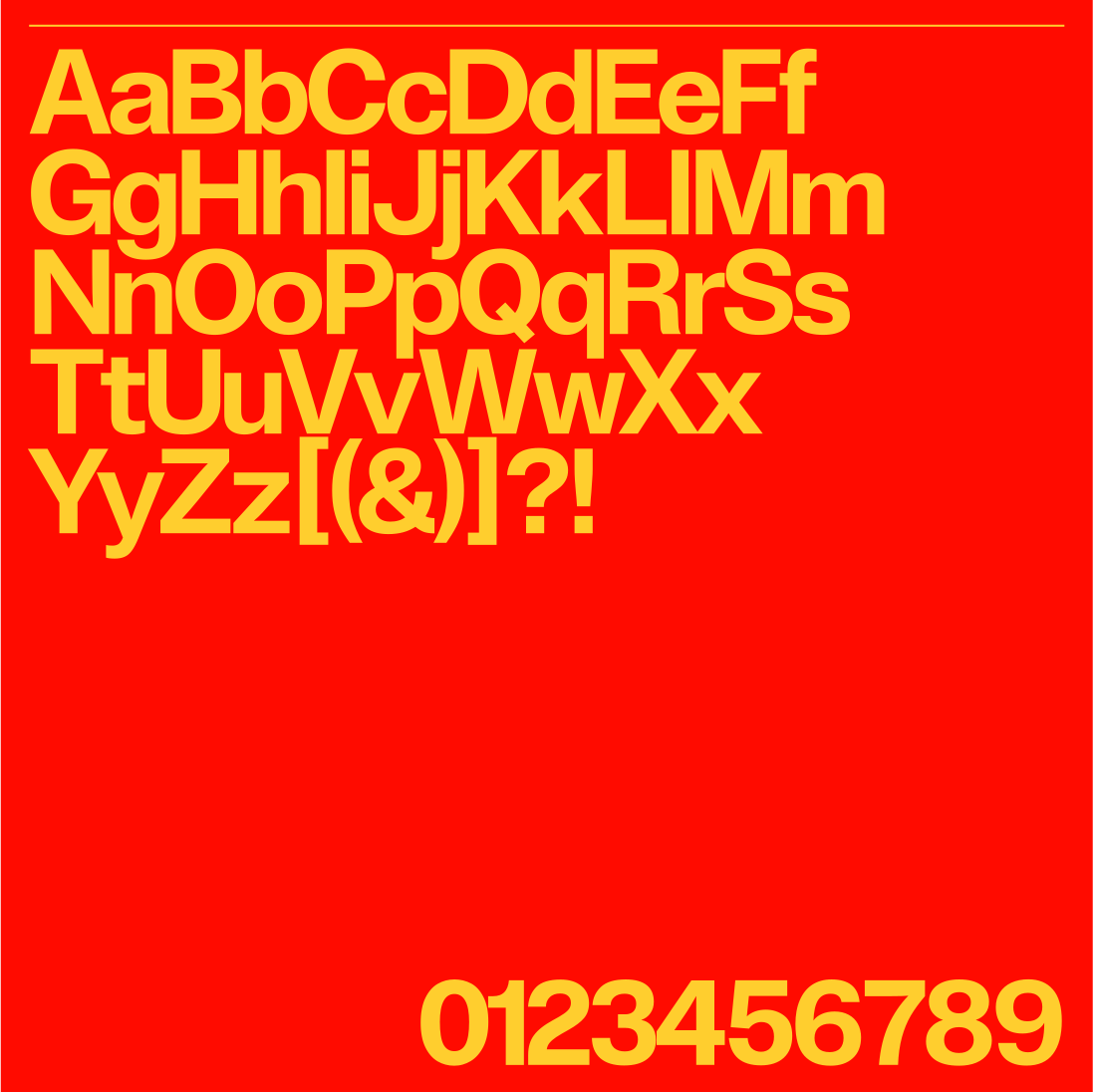
Glyphs for all occasions
Extensive Character Set
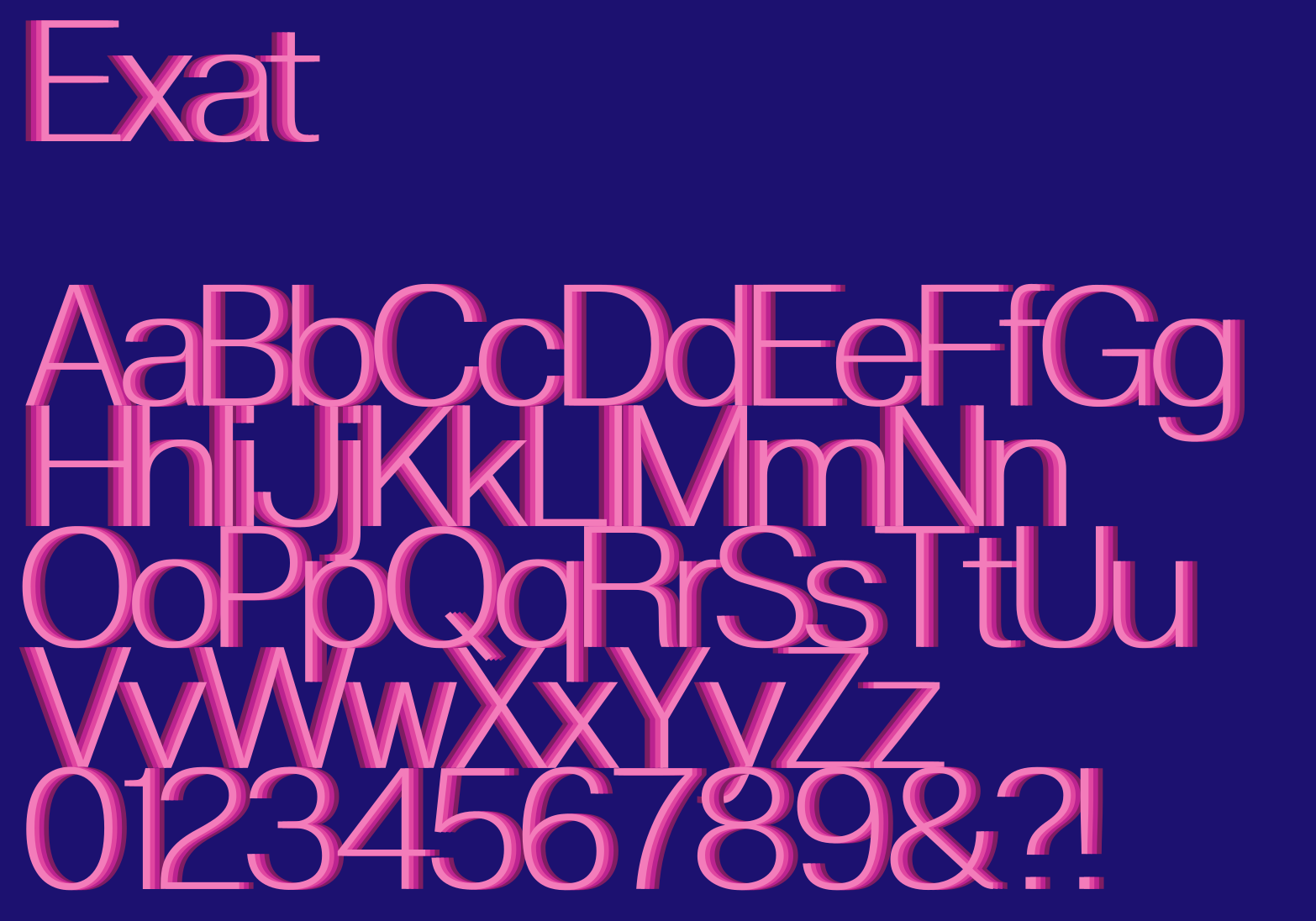
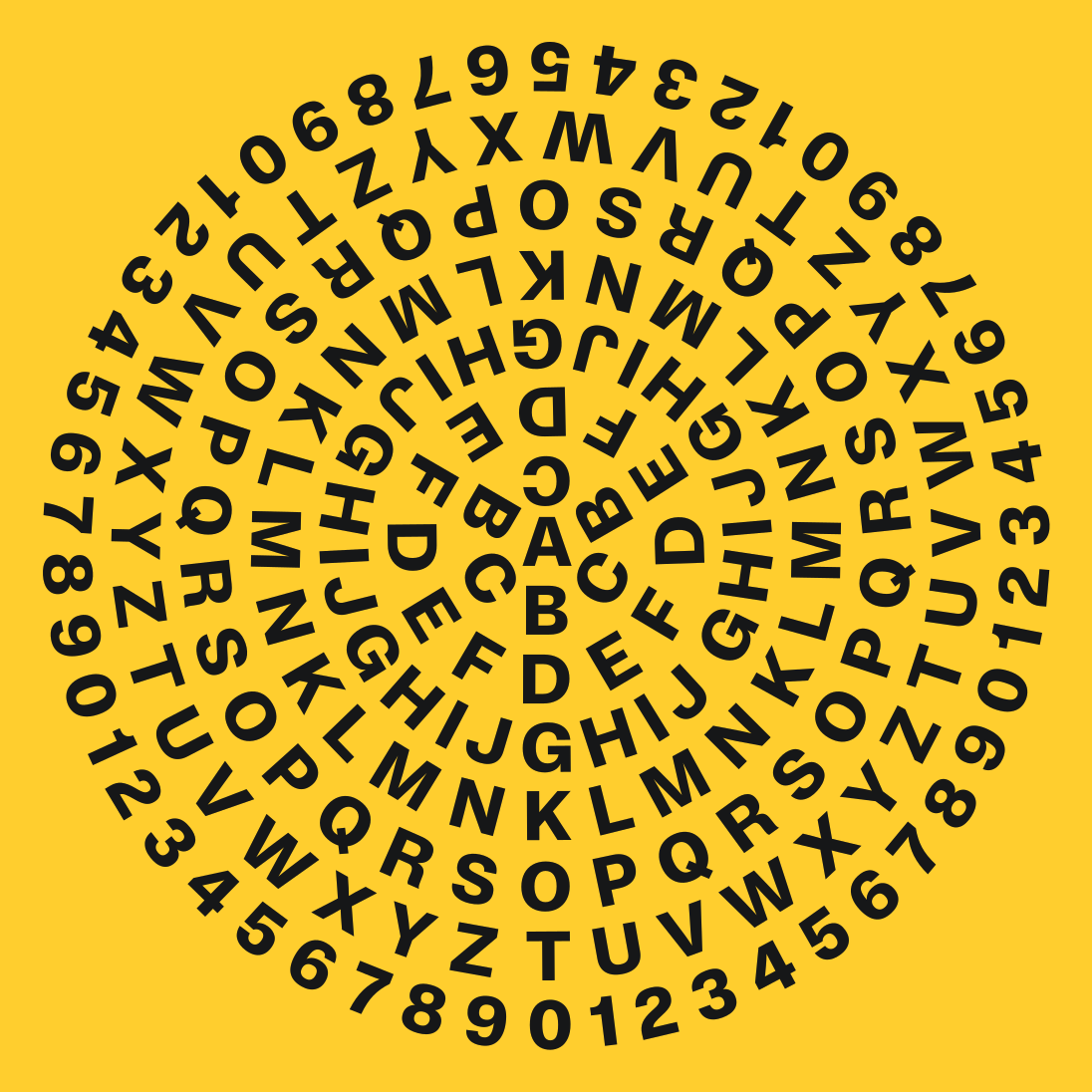
Exat consists of a whopping 1715 glyphs per style, ensuring
adaptability
across
various design contexts. The font includes many sets of numerals, symbols, standard and
uppercase punctuation, extensive currency symbol support, circled and squared letters and
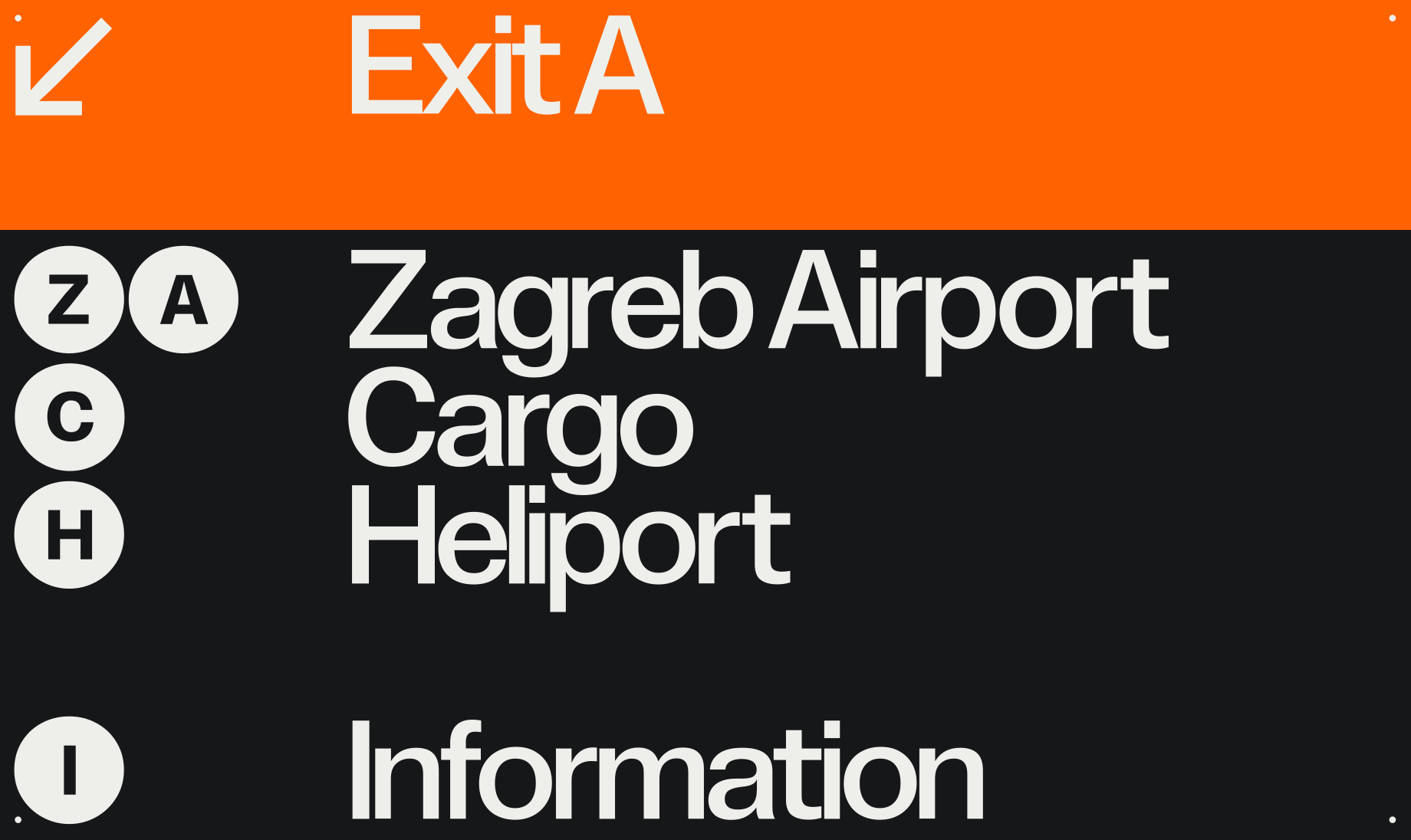
numbers, math symbols, arrows—and even a dingbat set. All this makes Exat a powerful
typographic
tool, aimed to aid in tackling your most demanding tasks.
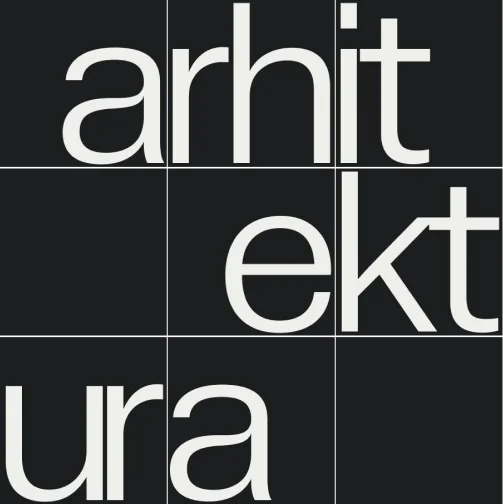
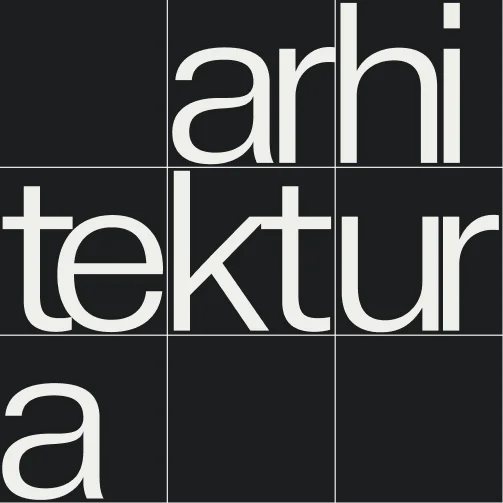
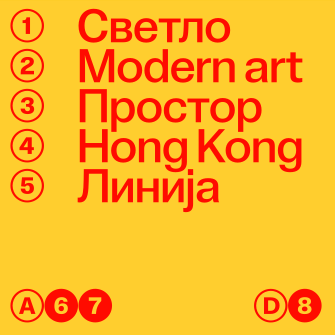


Exat has a range of glyphs, including some alternate symbols, making
it
flexible for all kinds of design projects.
G
l
y
p
h
s
e
t
Uppercase, Lowercase & Accented
- A
- B
- C
- D
- E
- F
- G
- H
- I
- J
- K
- L
- M
- N
- O
- P
- R
- Q
- S
- T
- U
- V
- W
- X
- Y
- Z
- a
- b
- c
- d
- e
- f
- g
- h
- i
- j
- k
- l
- m
- n
- o
- p
- r
- q
- s
- t
- u
- v
- w
- x
- y
- z
- Á
- Ă
- Ǎ
- Â
- Ä
- Ạ
- À
- Ā
- Ą
- Å
- Ã
- Ắ
- Ặ
- Ằ
- Ẳ
- Ẵ
- Ấ
- Ậ
- Ầ
- Ẩ
- Ẫ
- Ả
- Æ
- Ǽ
- Ǣ
- Ḅ
- Ɓ
- Ć
- Č
- Ç
- Ĉ
- Ċ
- Ð
- Ď
- Đ
- Ḍ
- Ɗ
- Ḏ
- É
- Ĕ
- Ě
- Ȩ
- Ê
- Ế
- Ệ
- Ề
- Ể
- Ễ
- Ë
- Ė
- Ẹ
- È
- Ē
- Ę
- Ɛ
- Ǝ
- Ẽ
- Ẻ
- Ğ
- Ĝ
- Ģ
- Ġ
- Ḡ
- Ǧ
- Ħ
- Ḫ
- Ḩ
- Ĥ
- Ḧ
- Ḥ
- Í
- Ĭ
- Ǐ
- Î
- Ï
- İ
- Ị
- Ì
- Ỉ
- Ī
- Į
- Ɨ
- Ĩ
- IJ
- Ĵ
- Ķ
- Ḳ
- Ḵ
- Ƙ
- Ĺ
- Ľ
- Ļ
- Ḷ
- Ḹ
- Ŀ
- Ḻ
- Ł
- Ṁ
- Ṃ
- Ń
- Ň
- Ņ
- Ṅ
- Ṇ
- Ɲ
- Ṉ
- Ñ
- Ŋ
- Ó
- Ŏ
- Ǒ
- Ô
- Ố
- Ộ
- Ồ
- Ổ
- Ỗ
- Ỏ
- Ơ
- Ớ
- Ợ
- Ờ
- Ở
- Ỡ
- Ö
- Ọ
- Ò
- Ő
- Ō
- Ɔ
- Ø
- Ǿ
- Õ
- Œ
- Ṗ
- Þ
- Ŕ
- Ř
- Ŗ
- Ṙ
- Ṛ
- Ṝ
- Ṟ
- Ś
- Š
- Ş
- Ŝ
- Ș
- Ṣ
- ẞ
- Ə
- Ŧ
- Ť
- Ţ
- Ț
- Ṭ
- Ṯ
- Ú
- Ŭ
- Ǔ
- Û
- Ü
- Ǘ
- Ǚ
- Ǜ
- Ǖ
- Ủ
- Ư
- Ứ
- Ự
- Ừ
- Ử
- Ữ
- Ụ
- Ù
- Ű
- Ū
- Ų
- Ů
- Ũ
- Ʌ
- Ẃ
- Ŵ
- Ẅ
- Ẉ
- Ẁ
- Ẍ
- Ý
- Ŷ
- Ÿ
- Ẏ
- Ỵ
- Ỳ
- Ƴ
- Ỷ
- Ỹ
- Ȳ
- Ź
- Ž
- Ż
- Ẓ
- Ẕ
- á
- ă
- ắ
- ặ
- ằ
- ẳ
- ẵ
- ǎ
- â
- ấ
- ậ
- ầ
- ẩ
- ẫ
- ä
- ạ
- à
- ả
- ā
- ą
- å
- ã
- æ
- ǽ
- ǣ
- ḅ
- ɓ
- ć
- č
- ç
- ĉ
- ċ
- ð
- ď
- đ
- ḍ
- ḏ
- ɗ
- é
- ĕ
- ě
- ȩ
- ê
- ế
- ệ
- ề
- ể
- ễ
- ë
- ė
- ẹ
- è
- ẻ
- ē
- ę
- ɛ
- ẽ
- ǝ
- ə
- ğ
- ĝ
- ģ
- ġ
- ḡ
- ǧ
- ħ
- ḫ
- ĥ
- ḩ
- ḧ
- ḥ
- ẖ
- ı
- í
- ĭ
- ǐ
- î
- ï
- ị
- ì
- ỉ
- ī
- į
- ɨ
- ĩ
- í
- j
- ij
- j
- ȷ
- ĵ
- ķ
- ḳ
- ḵ
- ƙ
- ĺ
- ľ
- ļ
- ŀ
- ḷ
- ḹ
- ḻ
- ł
- ṁ
- ṃ
- ń
- ň
- ņ
- ṅ
- ṇ
- ɲ
- ṉ
- ñ
- ŋ
- ó
- ŏ
- ǒ
- ô
- ố
- ộ
- ồ
- ổ
- ỗ
- ö
- ọ
- ò
- ỏ
- ơ
- ớ
- ợ
- ờ
- ở
- ỡ
- ő
- ō
- ɔ
- ø
- ǿ
- õ
- œ
- ṗ
- þ
- ŕ
- ř
- ŗ
- ṙ
- ṛ
- ṝ
- ṟ
- ś
- š
- ş
- ŝ
- ș
- ṣ
- ß
- ŧ
- ť
- ţ
- ț
- ṭ
- ṯ
- ú
- ŭ
- ǔ
- û
- ü
- ǘ
- ǚ
- ǜ
- ǖ
- ụ
- ù
- ủ
- ư
- ứ
- ự
- ừ
- ử
- ữ
- ű
- ū
- ų
- ů
- ũ
- ʌ
- ẃ
- ŵ
- ẅ
- ẉ
- ẁ
- ẍ
- ý
- ŷ
- ÿ
- ẏ
- ỵ
- ỳ
- ƴ
- ỷ
- ỹ
- ȳ
- ź
- ž
- ż
- ẓ
- ẕ
Cap height
X height
Baseline
Descender
r
Cyrillic
- А
- Б
- В
- Г
- Ѓ
- Ґ
- Ғ
- Д
- Е
- Ѐ
- Ё
- Я
- Ю
- Ж
- З
- И
- Й
- Ѝ
- К
- Ќ
- Л
- М
- Н
- О
- П
- Р
- С
- Т
- У
- Ў
- Ф
- Х
- Ц
- Ч
- Ш
- Щ
- Џ
- Ь
- Ы
- Ъ
- Љ
- Њ
- Ѕ
- Є
- Э
- І
- Ї
- Ј
- Ћ
- Ђ
- Ѣ
- Ѳ
- Ѵ
- Җ
- Қ
- Ҡ
- Ң
- Ԥ
- Ҭ
- Ү
- Ұ
- Ҳ
- Ҵ
- Ҷ
- Һ
- Ԧ
- Ӏ
- Ә
- Ӣ
- Ӯ
- Ө
- Д
- Л
- ӡ
- Ф
- а
- б
- в
- г
- ѓ
- ґ
- ғ
- д
- е
- ѐ
- я
- ё
- ю
- ж
- з
- и
- й
- ѝ
- к
- ќ
- л
- м
- н
- о
- п
- р
- с
- т
- у
- ў
- ф
- х
- ц
- ч
- ш
- щ
- џ
- ь
- ы
- ъ
- љ
- њ
- ѕ
- є
- э
- і
- ї
- ј
- ћ
- ђ
- ѣ
- ѳ
- ѵ
- җ
- қ
- ң
- ү
- ұ
- ҳ
- ҷ
- һ
- ӏ
- ә
- ӡ
- ӣ
- ө
- ӯ
- д
- г
- л
- ж
- з
- и
- й
- к
- ш
- щ
- ю
- ї
- б
- в
- ъ
- ь
- ԧ
- ҭ
- ҡ
- ҵ
Cap height
X height
Baseline
Descender
r
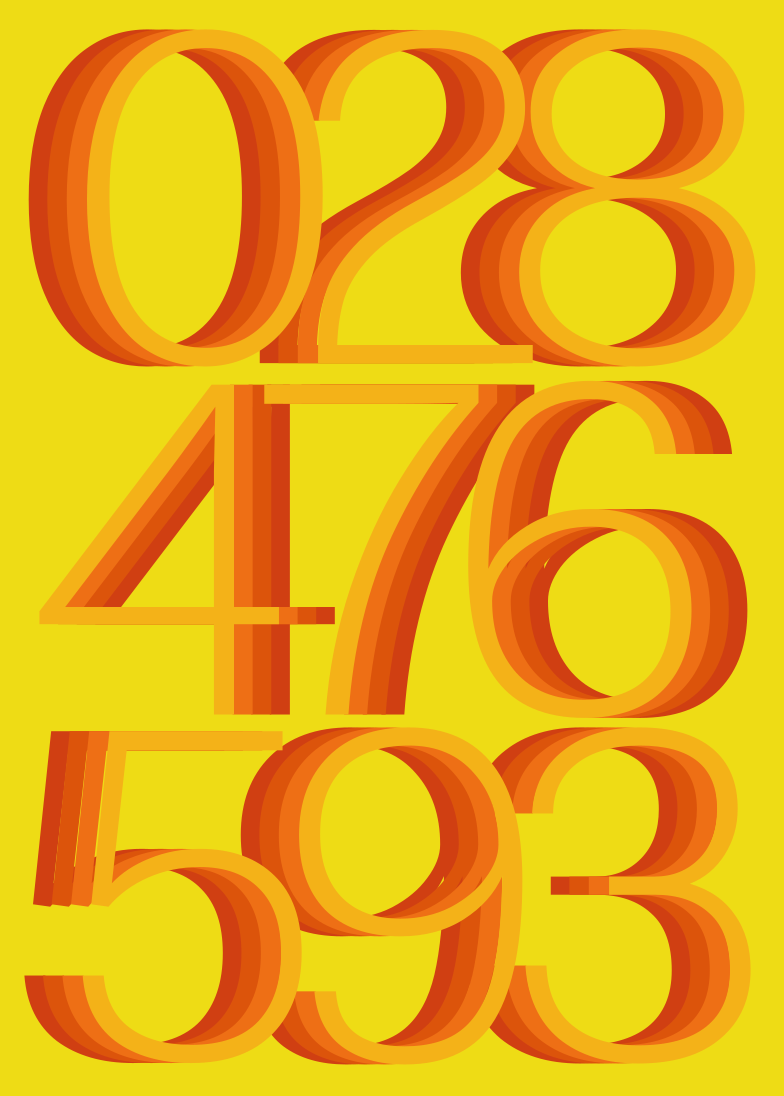
Figures & Symbols
- 0
- 1
- 2
- 3
- 4
- 5
- 6
- 7
- 8
- 9
- ⓿
- ❶
- ❷
- ❸
- ❹
- ❺
- ❻
- ❼
- ❽
- ❾
- 0
- 1
- 2
- 3
- 4
- 5
- 6
- 7
- 8
- 9
- 0
- 1
- 2
- 3
- 4
- 5
- 6
- 7
- 8
- 9
- 0
- 1
- 2
- 3
- 4
- 5
- 6
- 7
- 8
- 9
- 0
- 1
- 2
- 3
- 4
- 5
- 6
- 7
- 8
- 9
- ฿
- ₿
- ¢
- ₢
- ¤
- $
- €
- ₣
- ₲
- ₴
- ₭
- ₾
- ₤
- ₼
- ₥
- ₦
- ₧
- ₱
- ₽
- ₨
- ₹
- £
- ₸
- ₮
- ₩
- ¥
- ¢
- ₩
- ₫
- ₵
- ₺
- ₡
- ↑
- ↗
- →
- ↘
- ↓
- ↙
- ←
- ↖
- ↔
- ↕
- ↤
- ↥
- ↦
- ↧
- ⇤
- ⇥
- ↩
- ↪
- ↺
- ↻
- ⇅
- ⇈
- ⇉
- ⇊
- ⇇
- ■
- □
- ●
- ○
- ◊
- .
- ,
- :
- ;
- …
- !
- ¡
- ?
- ¿
- ·
- •
- *
- ⁕
- #
- /
- \
- -
- –
- —
- _
- /
- (
- )
- {
- }
- [
- ]
- 〚
- 〛
- ‚
- „
- “
- ”
- ‘
- ’
- «
- »
- ‹
- ›
- "
- '
- @
- &
- ¶
- §
- ©
- ®
- ™
- °
- |
- ¦
- †
- ‡
- №
- ☹
- ☺
- ✳
- µ
- ª
- º
-
- +
- −
- ×
- ÷
- =
- ≠
- >
- <
- ≥
- ≤
- ±
- ≈
- ~
- ¬
- ^
- ∅
- ∏
- ∑
- %
- ‰
- ℀
- ℅
- ℆
- ⅟
- ½
- ↉
- ⅓
- ⅔
- ¼
- ¾
- ⅕
- ⅖
- ⅗
- ⅘
- ⅙
- ⅚
- ⅐
- ⅛
- ⅜
- ⅝
- ⅞
- ⅑
- ⅒
- 🅐
- 🅑
- 🅒
- 🅓
- 🅔
- 🅕
- 🅖
- 🅗
- 🅘
- 🅙
- 🅚
- 🅛
- 🅜
- 🅝
- 🅞
- 🅟
- 🅠
- 🅡
- 🅢
- 🅣
- 🅤
- 🅥
- 🅦
- 🅧
- 🅨
- 🅩
- A
- B
- C
- D
- E
- F
- G
- H
- I
- J
- K
- L
- M
- N
- O
- P
- R
- Q
- S
- T
- U
- V
- W
- X
- Y
- Z
- A
- B
- C
- D
- E
- F
- G
- H
- I
- J
- K
- L
- M
- N
- O
- P
- R
- Q
- S
- T
- U
- V
- W
- X
- Y
- Z
- A
- B
- C
- D
- E
- F
- G
- H
- I
- J
- K
- L
- M
- N
- O
- P
- R
- Q
- S
- T
- U
- V
- W
- X
- Y
- Z
- A
- B
- C
- D
- E
- F
- G
- H
- I
- J
- K
- L
- M
- N
- O
- P
- R
- Q
- S
- T
- U
- V
- W
- X
- Y
- Z
Cap height
X height
Baseline
Descender
r
Widths, weights & variable font
Design Space
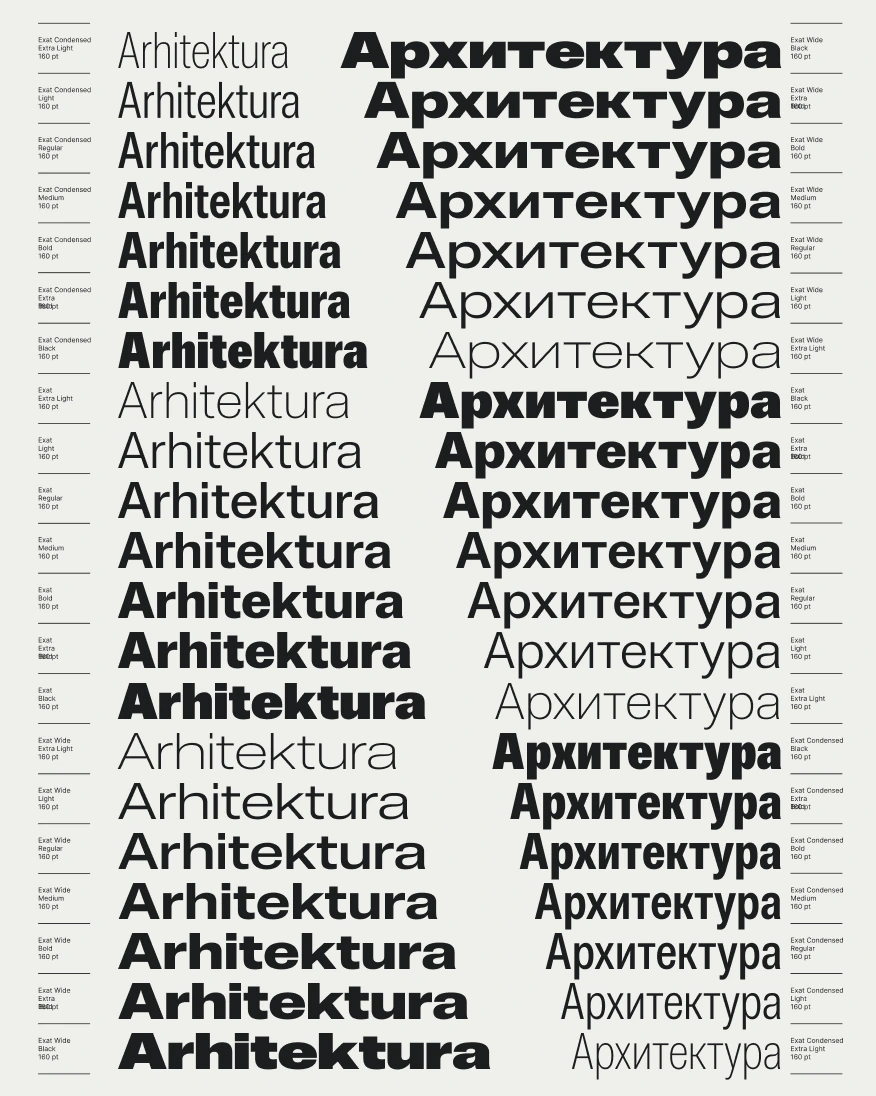
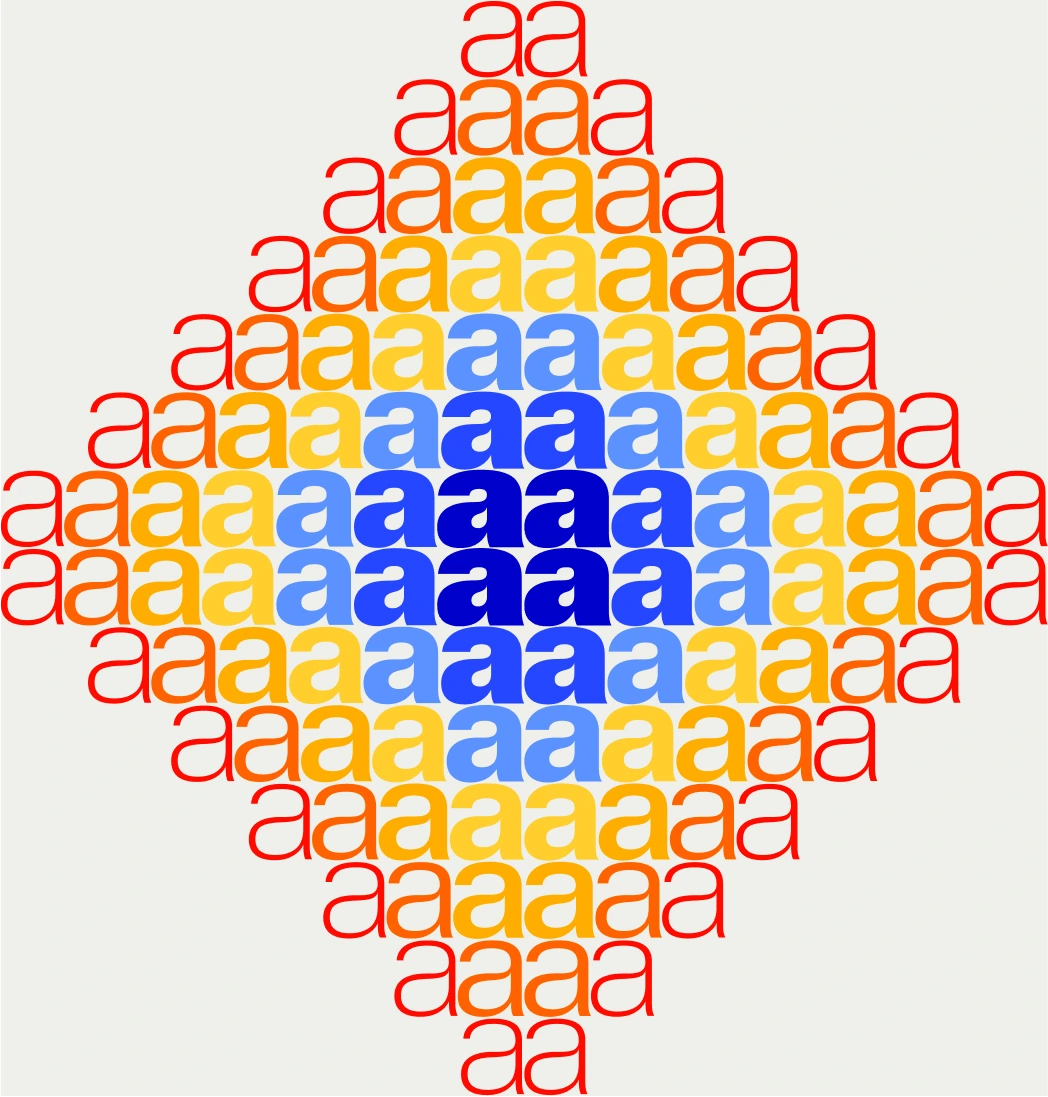
Exat comes in seven weights, ranging from Extra Light to Black. We expanded the system to
the
Condensed, Normal, and Wide subfamilies to further enhance its versatility. This makes for a
total of 21 carefully crafted styles that retain a print-like quality on account of their
tight
spacing and refined curves.
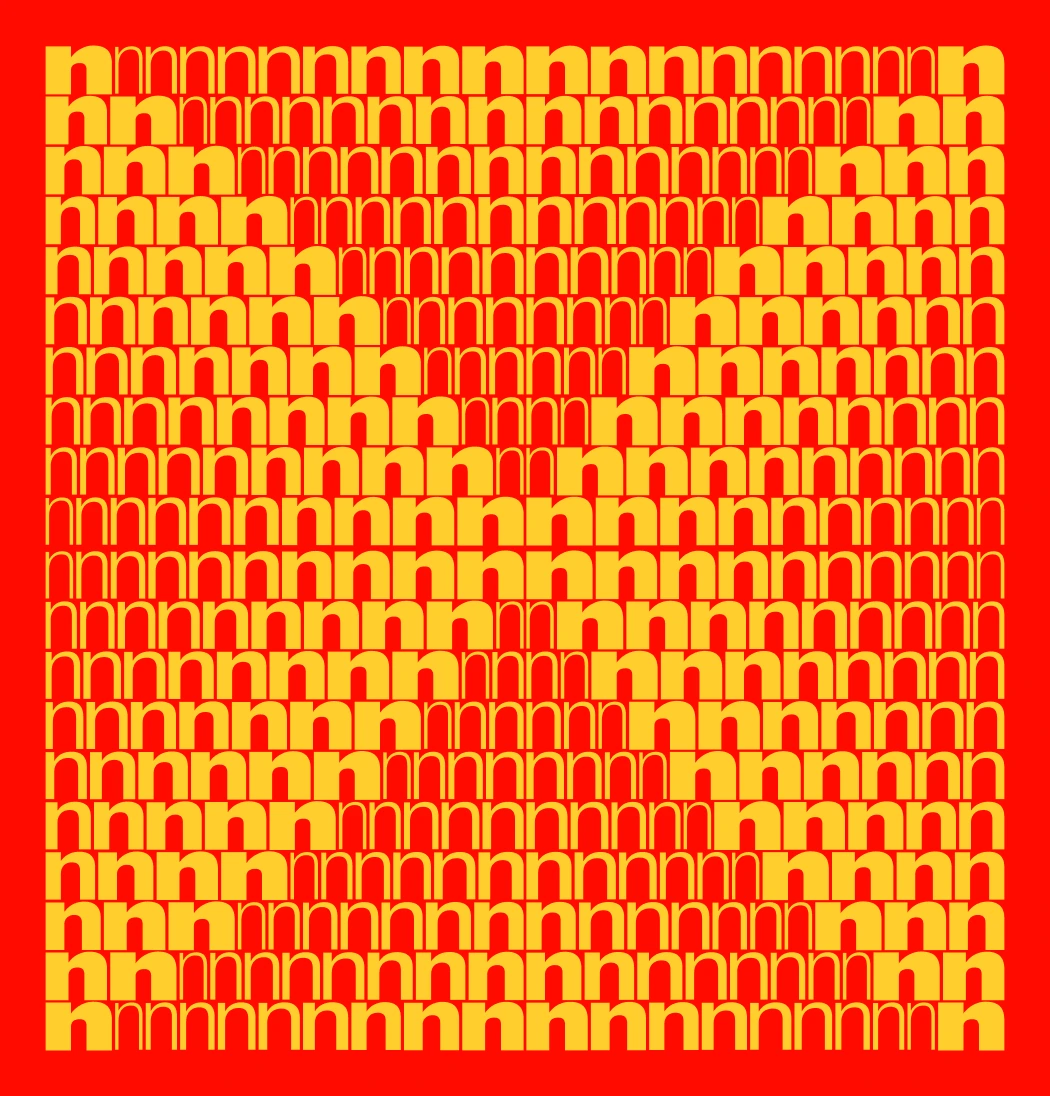
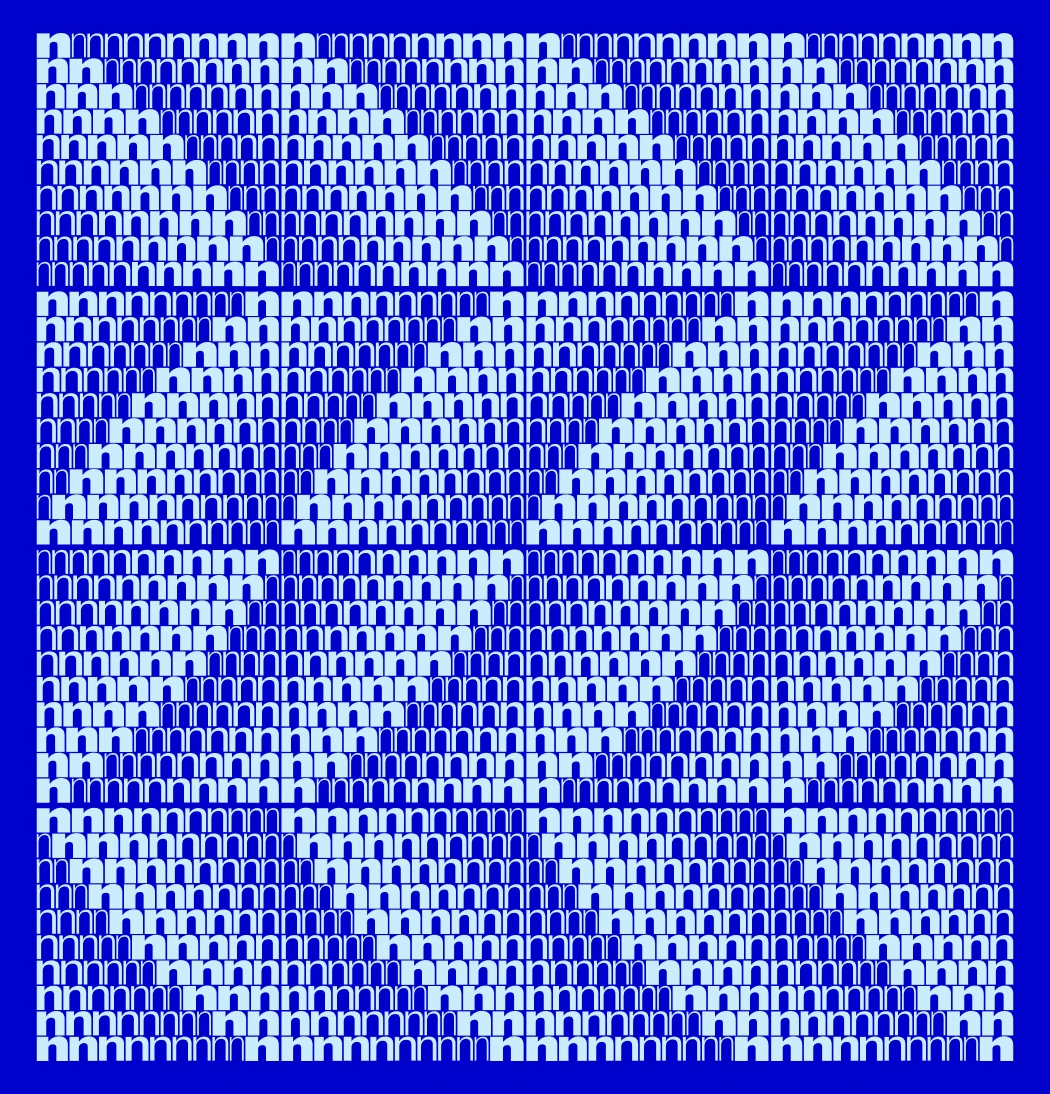
The variable font technology provides users with maximum control in choosing the exact type—fit for any setting.
The variable font technology provides users with maximum control in choosing the exact type—fit for any setting.
- Extra Light Condensed
- Light Condensed
- Regular Condensed
- Medium Condensed
- Bold Condensed
- Extra Bold Condensed
- Black Condensed
- Extra Light
- Light
- Regular
- Medium
- Bold
- Extra Bold
- Black
- Extra Light Wide
- Light Wide
- Regular Wide
- Medium Wide
- Bold Wide
- Extra Bold Wide
- Black Wide
Rẽ
Condensed
Fonts frame form, clarity, and balance.
Fonts frame form, clarity, and balance.
Fonts frame form, clarity, and balance.
Fonts frame form, clarity, and balance.
Fonts frame form, clarity, and balance.
Fonts frame form, clarity, and balance.
Fonts frame form, clarity, and balance.
Standard
Fonts frame form, clarity, and balance.
Fonts frame form, clarity, and balance.
Fonts frame form, clarity, and balance.
Fonts frame form, clarity, and balance.
Fonts frame form, clarity, and balance.
Fonts frame form, clarity, and balance.
Fonts frame form, clarity, and balance.
Wide
Fonts frame form, clarity, and balance.
Fonts frame form, clarity, and balance.
Fonts frame form, clarity, and balance.
Fonts frame form, clarity, and balance.
Fonts frame form, clarity, and balance.
Fonts frame form, clarity, and balance.
Fonts frame form, clarity, and balance.
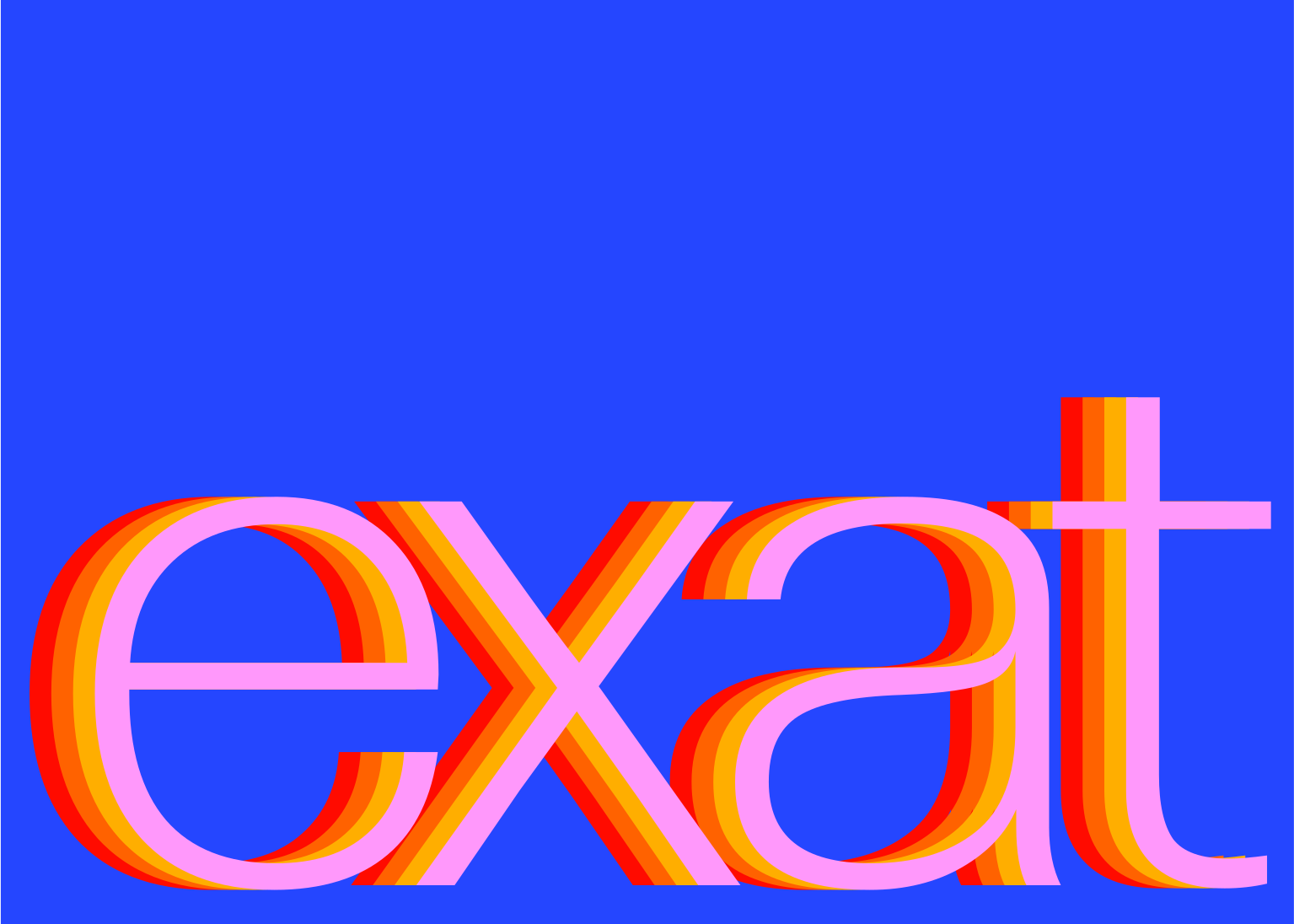
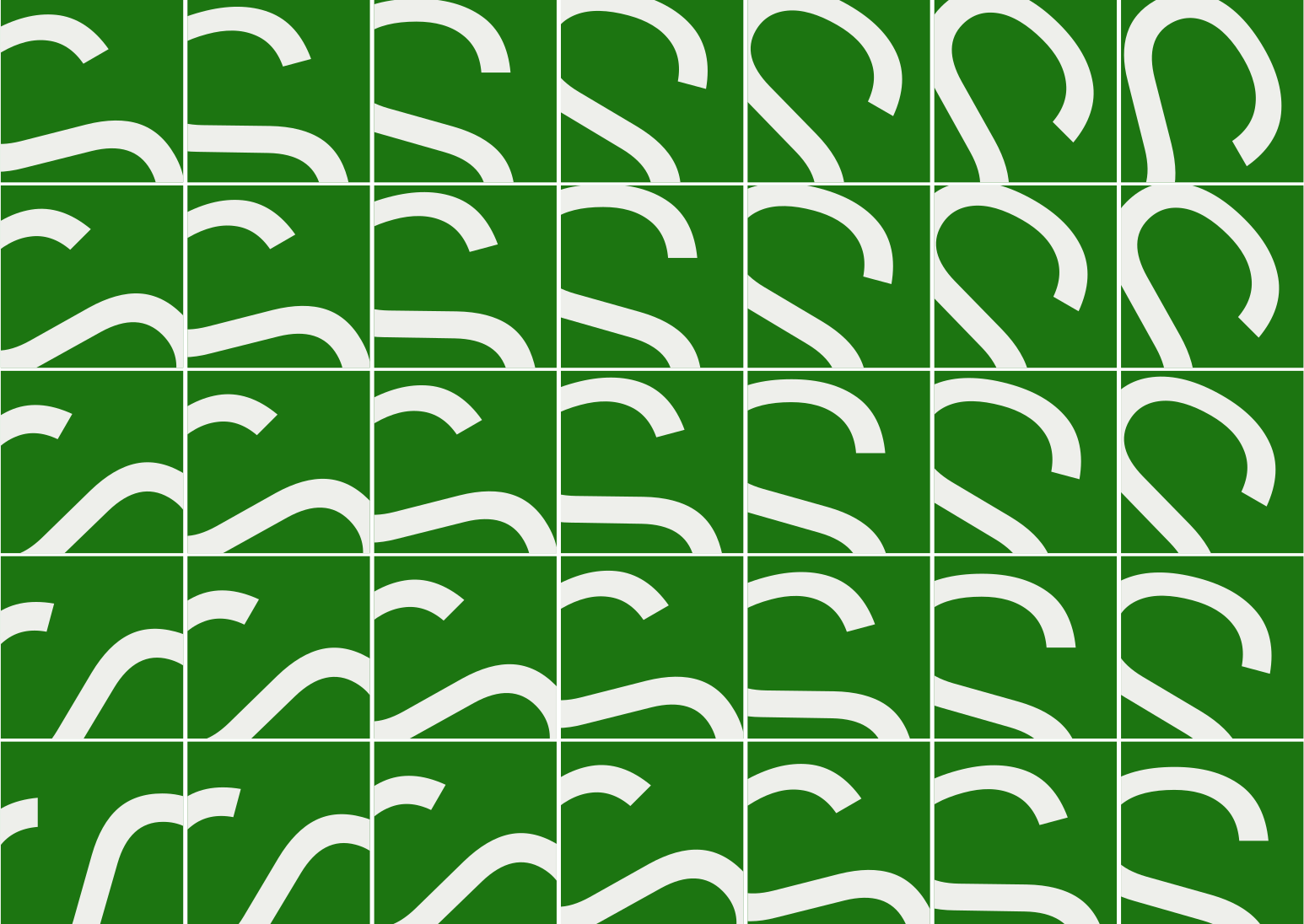
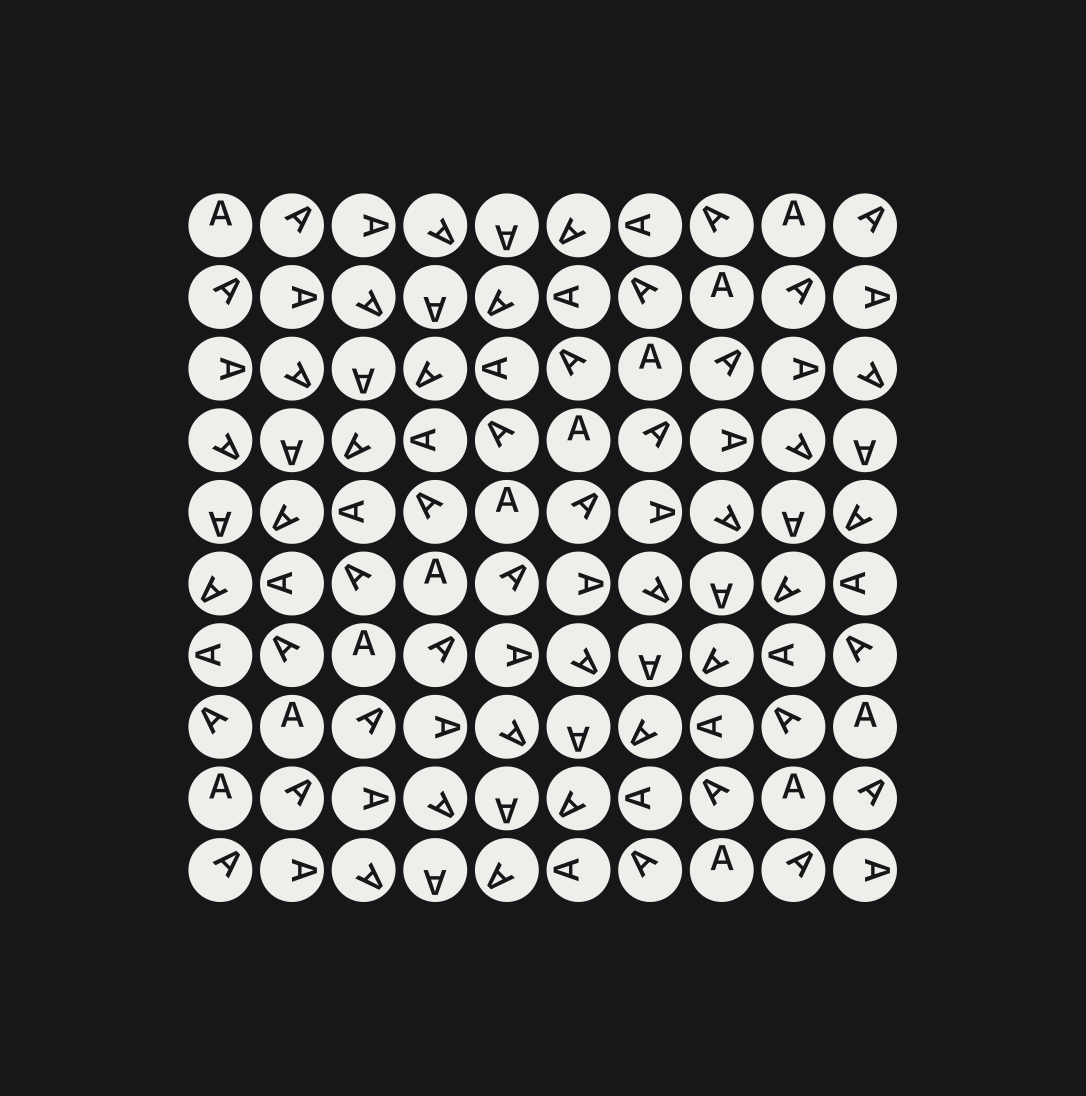
In modernist graphic design, artists often sought to depict motion by
using
dynamic compositions, lines, and abstract forms that conveyed energy and movement. Inspired
by
advancements in technology and the fast-paced rhythm of modern life, many modernists aimed
to
capture the speed and dynamism of the era. This is evident in works from movements like
Futurism, where diagonal lines, repetitive patterns, and overlapping shapes were employed to
evoke a sense of motion and acceleration. The idea of motion was further explored in Bauhaus
graphic design, which used geometric forms and asymmetry to create visual tension and flow.

This approach can be closely linked to contemporary motion design, where
the principles of rhythm, flow, and dynamism are translated into animated graphics.
Just as modernist designs aimed to imply movement in static media,
motion design takes these ideas a step further by bringing them to life through animation,
transforming visual elements into dynamic experiences. While modernist artists relied on
lines, shapes, and composition to create the illusion of motion on a flat, static surface,
motion design builds upon these principles by incorporating time as a key dimension. This
allows designers to manipulate how elements move, interact, and evolve over time, adding
layers of meaning and engagement that static visuals cannot achieve.
Customisation with alternates
Stylistic sets
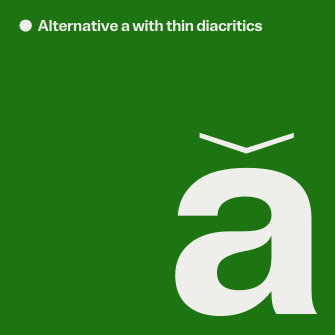
Inspired by the modernist era and local Croatian graphic design
quirks—such as modified thin accents—we developed a stylistic set that can turn diacritics,
punctuation, and even symbols into their thinner alternates.
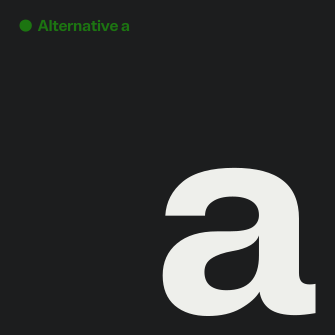
There is a substitute shape for the lowercase letter “a”, as well as options to place letters and numbers into squares and circles.
There is a substitute shape for the lowercase letter “a”, as well as options to place letters and numbers into squares and circles.
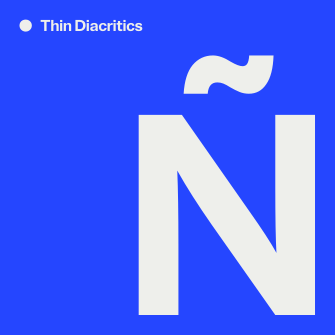
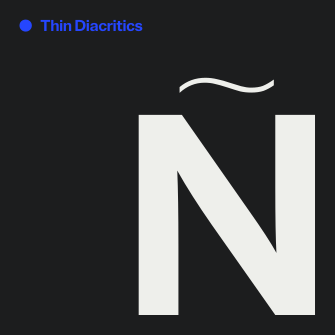
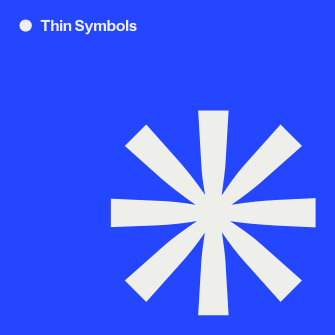
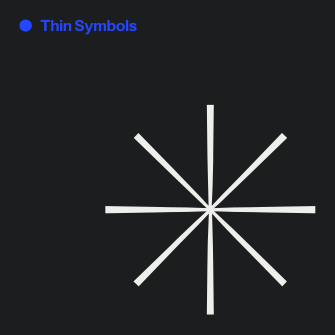
Thin Alternates
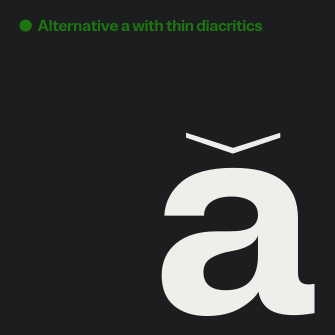
With this unique stylistic set you're able to transform all accents and
symbols into thin alternatives.





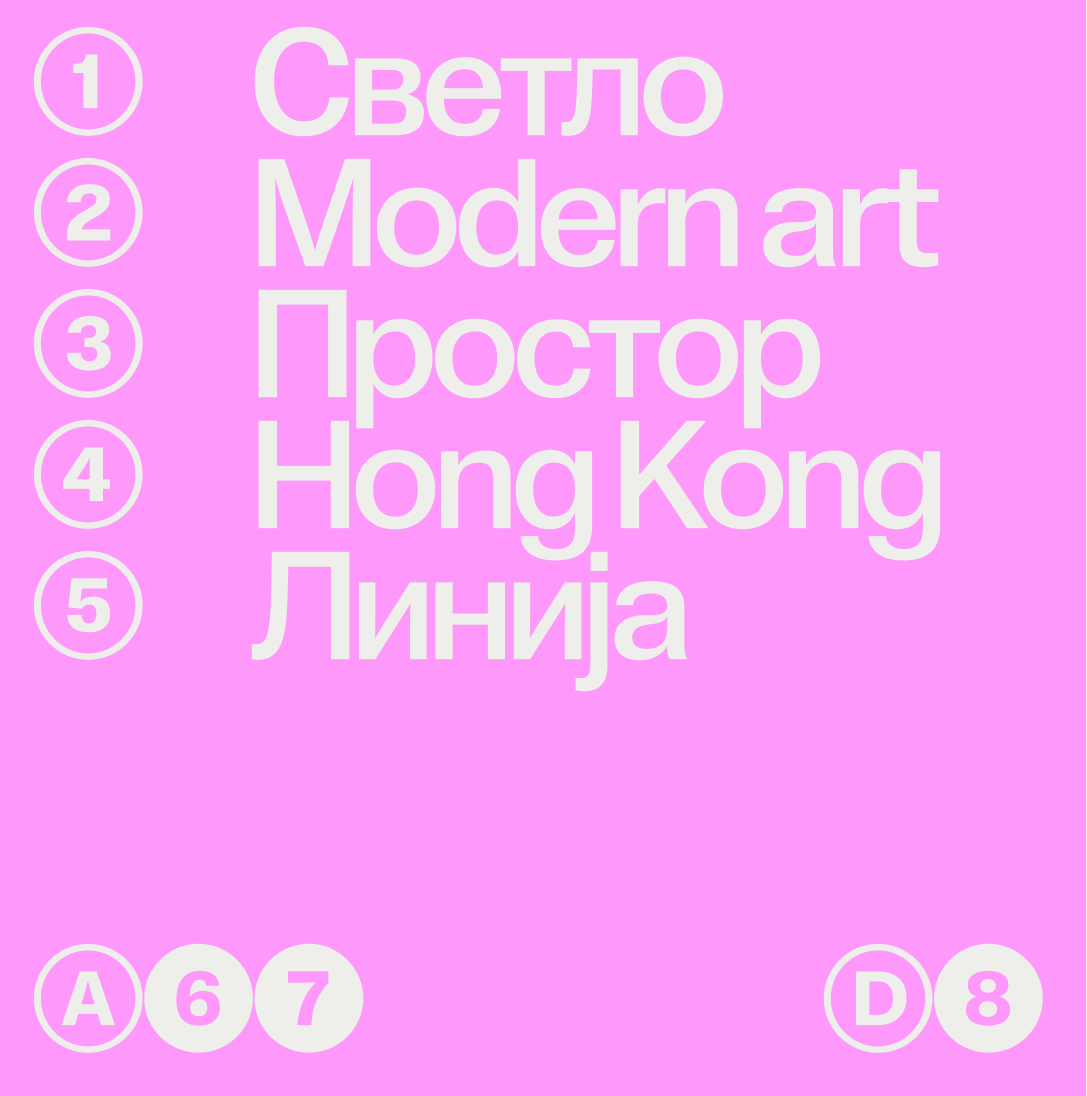
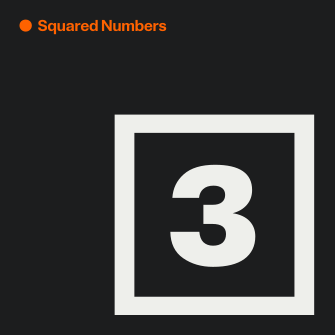
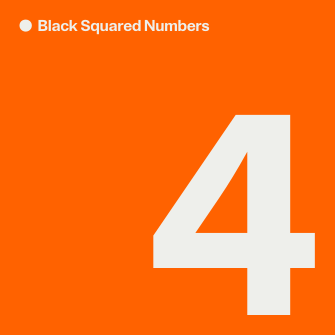
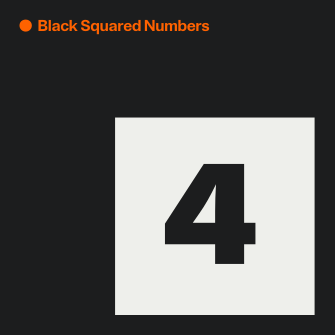
Encapsulated Numbers
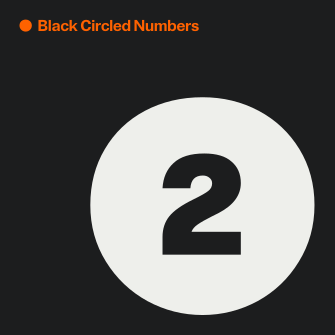
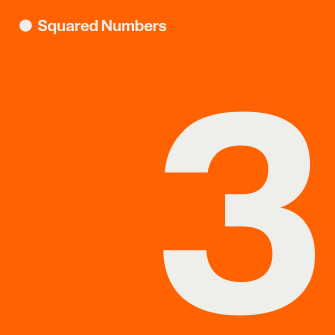
Whether you're designing a wayfinding project or making a magazine
pagination, numbers inside circles and squares can often come in handy.
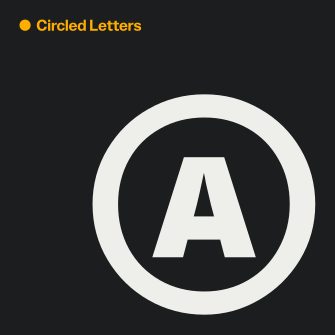
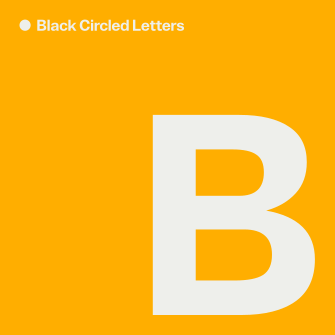
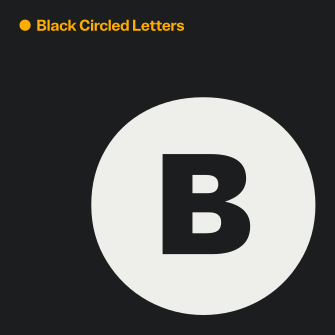
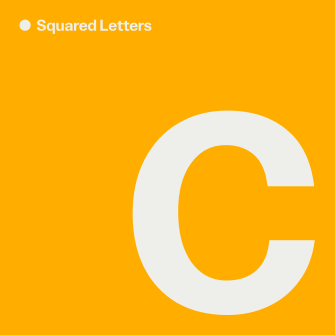
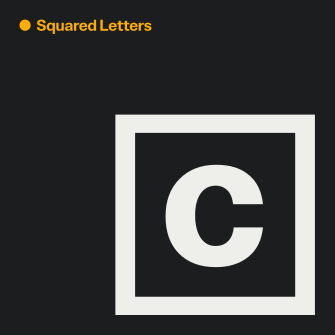
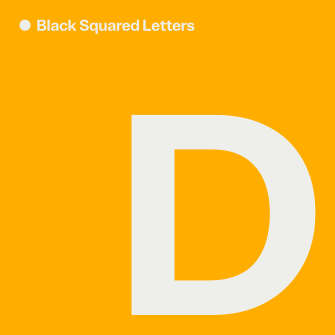
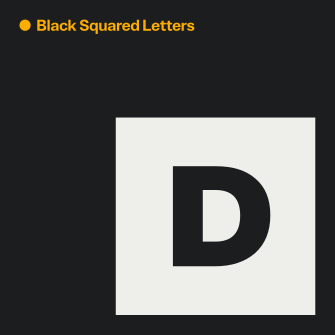
Encapsulated Letters
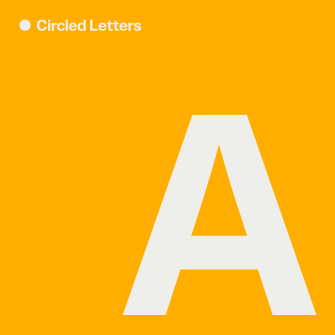
For a stronger visual impact, automatically place every letter into a
square
or a circle. There are options with both full or empty shapes.
Alternative a
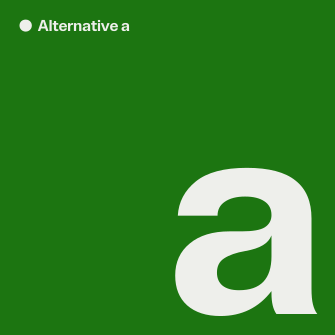
When the job gets really specific, opt for a version of lowercase letter
a
with a tail.
Smart functionality
Open Type Features
Everything you’d need when it comes to all-encompassing functionality—and then Exat can do some
more: case-sensitive characteristics, language-specific features, stylistic interventions, and
number-related properties, such as a slashed zero, fractions, and superior/inferior figures.
Find out what Exat can do for you—it’s just a click away in the Open Type menu.
Find out what Exat can do for you—it’s just a click away in the Open Type menu.
- Case sensitive forms
- Fractions
- Numerators
- Denominators
- Superscript
- Subscript
- Tabular figures
- Slashed zero
- Catalan
- Dutch
- Romanian & Moldavian
- Serbian
- Bulgarian
- Ukraininan
Two scripts, over 430 languages
Language Support
The character set supports over 430 languages. It covers Christoph Koeberlin’s Latin M
character set, standard for Latin-based languages.
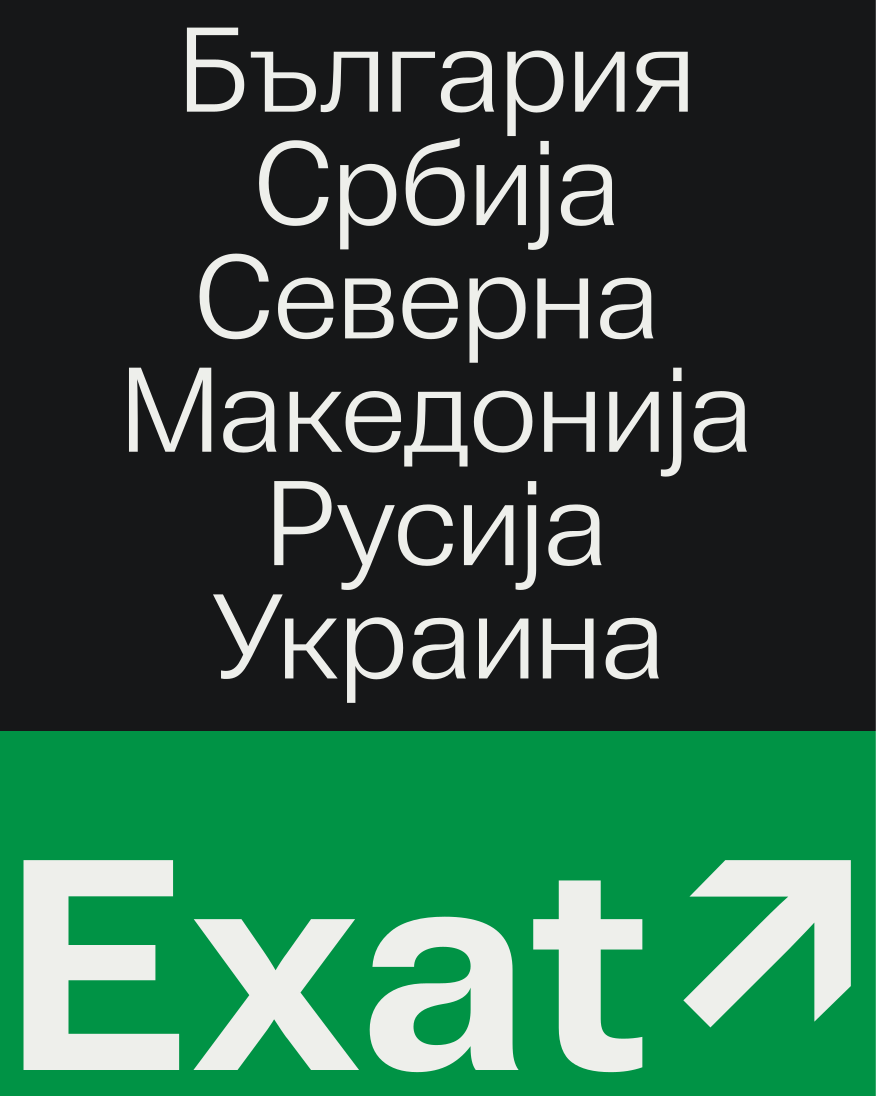
When it comes to the Cyrillic script, Exat supports the Adobe Extended Cyrillic Glyph set for Russian, Belarussian, Bulgarian, Ukrainian, Serbian, and Macedonian.
character set, standard for Latin-based languages.
When it comes to the Cyrillic script, Exat supports the Adobe Extended Cyrillic Glyph set for Russian, Belarussian, Bulgarian, Ukrainian, Serbian, and Macedonian.